Time is something you can't see.
Time can't be touched. It has no color, no smell, no shape. Even for an adult, it's a strange thing to exist — once you really stop and think about it.
For a child, it's stranger still. We adults can't quite reach into the whole of what it's like in there — but this much we can tell: inside a child's world, things and concepts wear different shapes than they do in ours. And of them all, time is the one that slips through hardest, the moment we try to hand it over in the words adults reach for.
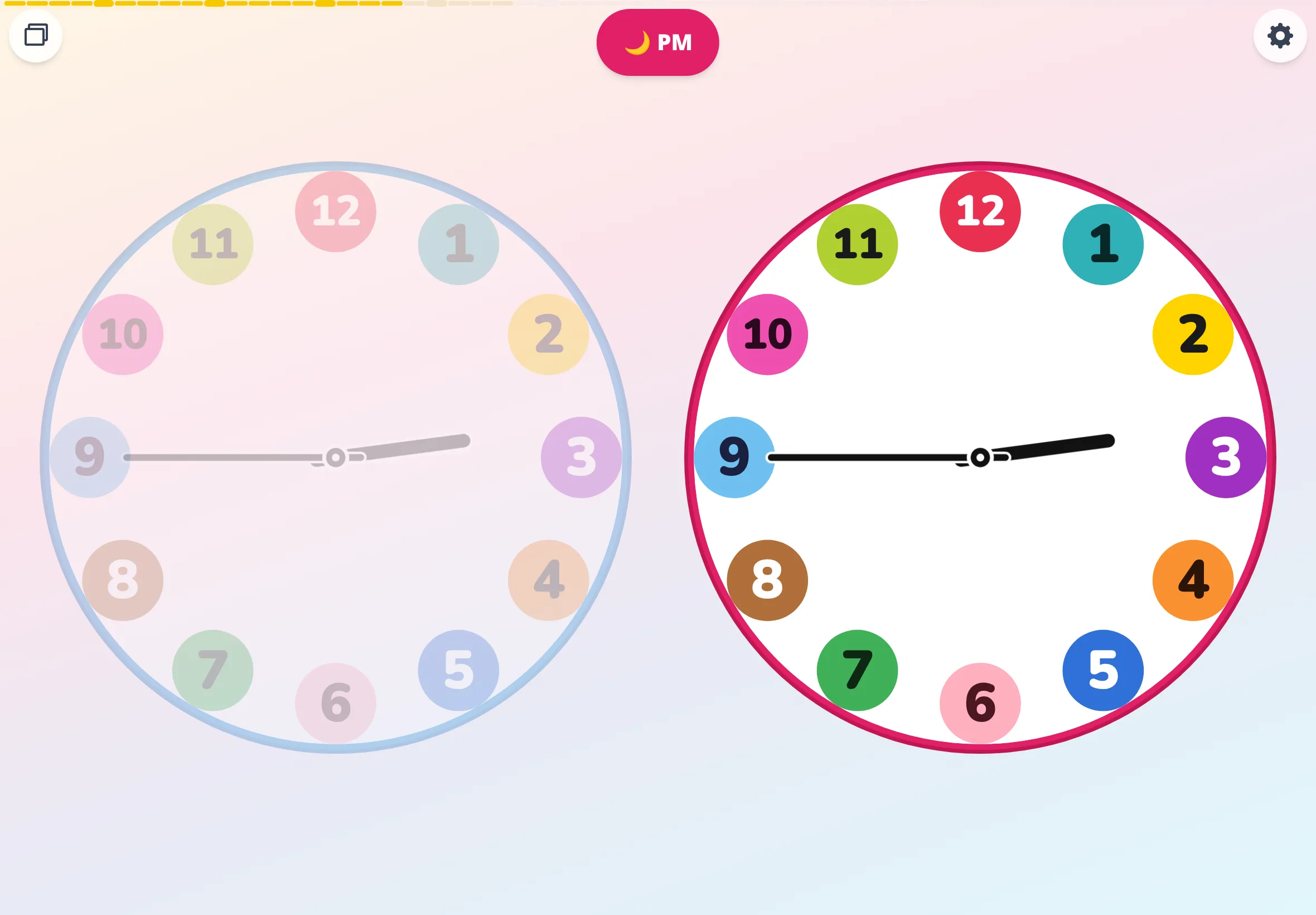
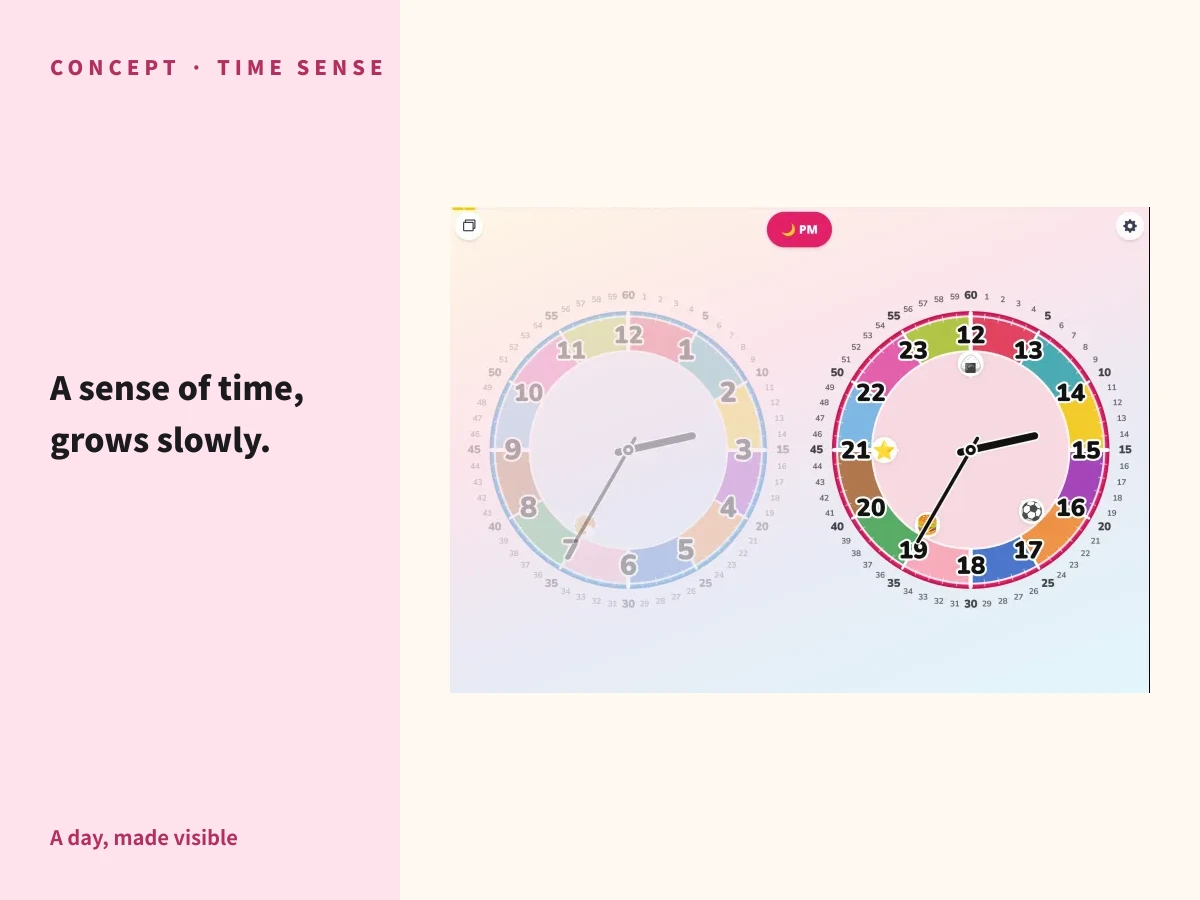
What's needed is a tool that swaps the abstraction of time for a shape two people can hold between them. That tool is the clock. A presence that keeps lending out its own form — so that the "time" each of us is living, private and slightly unalike, can finally pass from one person to another.